


Various Problems Caused by Static Electricity
During the dry season, we often feel a “zap” of static electricity whenever we touch something. Static electricity is not just a nuisance in daily life—it also causes a wide range of issues in production environments.
Typical examples of reduced quality and productivity due to static electricity include:
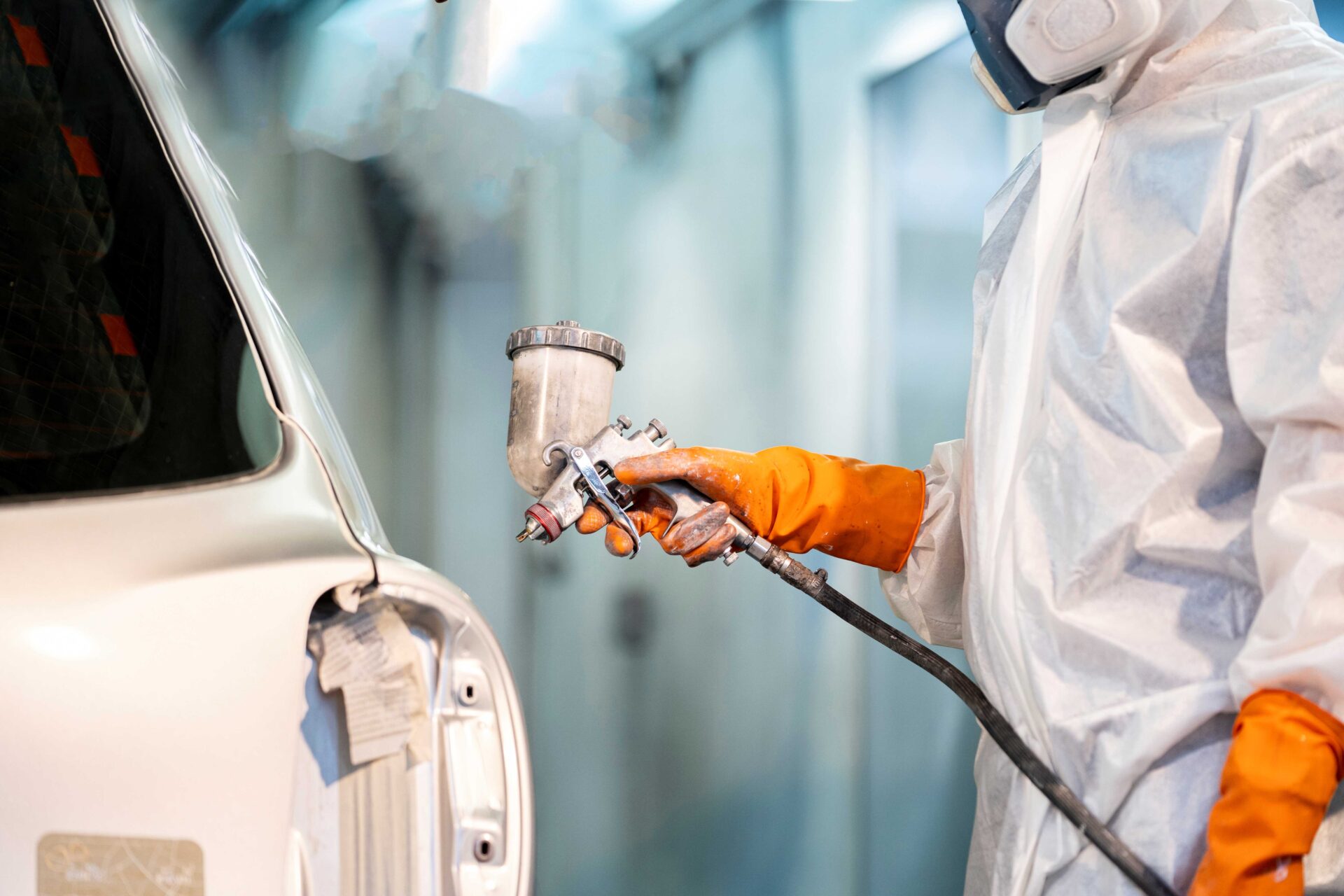
- Paint defects caused by attraction of dust and dirt
- Contamination during plate making or scanning processes
- Staining and darkening of plastic products
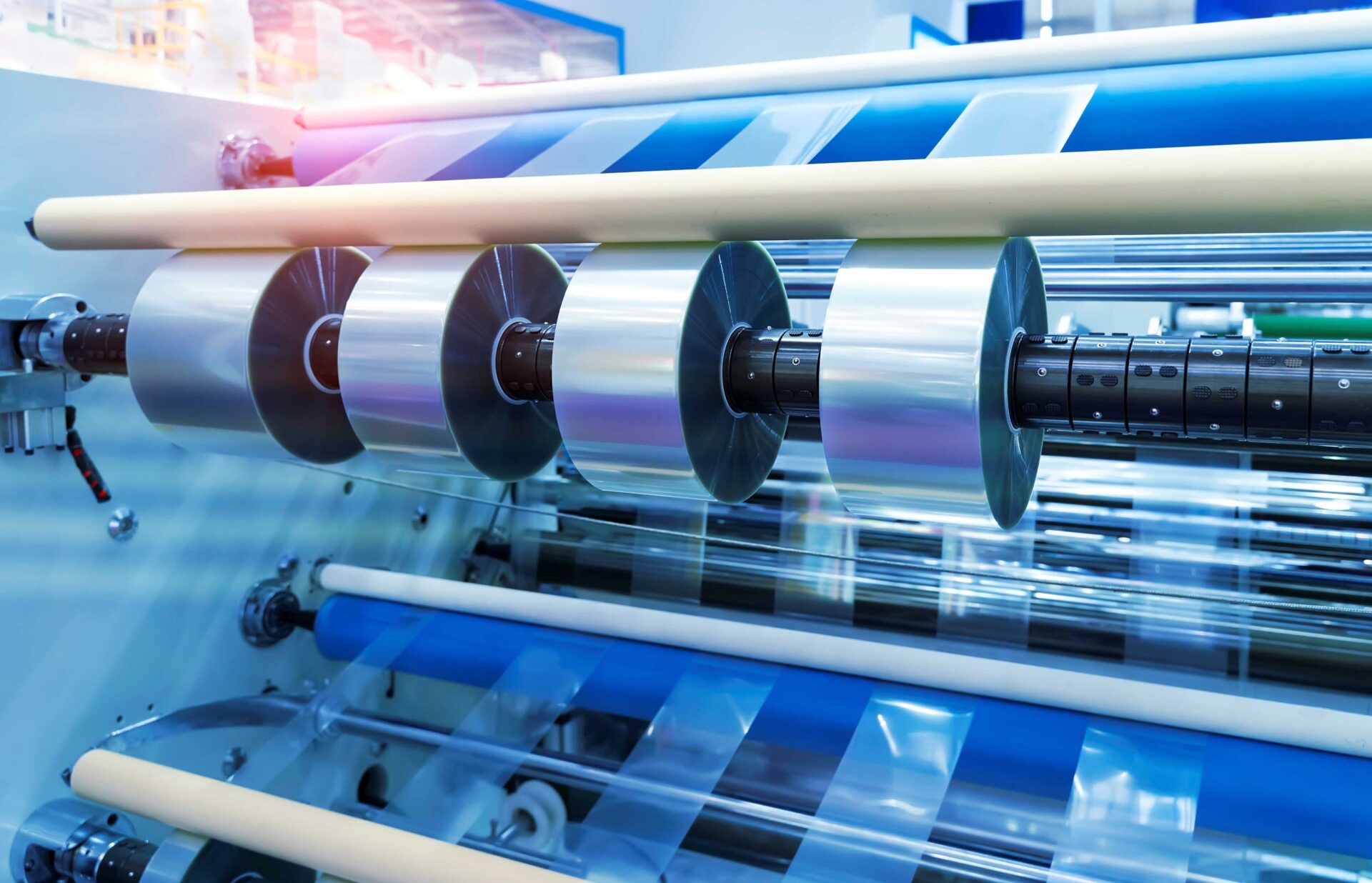
- Blocking or dust adhesion on resin plates and films
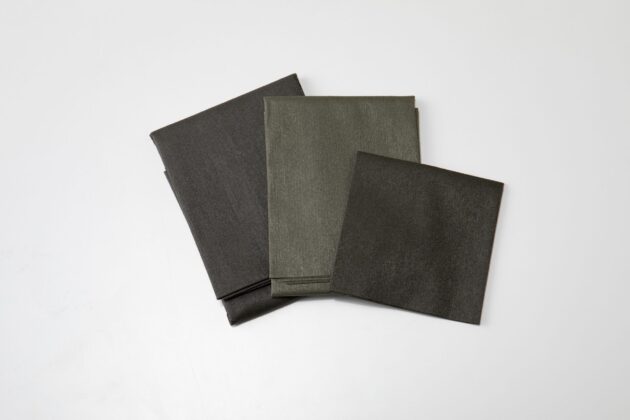
Our Antistatic Nonwoven Fabric, manufactured and sold under the concept of “discharging with nonwoven fabric”, incorporates electrostatic-dissipative performance directly into the nonwoven. Leveraging the inherent characteristics of nonwovens, it removes static electricity and prevents the re-adhesion of dust and particles.
Core Technologies Behind the Product
Our Antistatic Nonwoven Fabric’s performance is achieved through the following raw material and converting technologies:
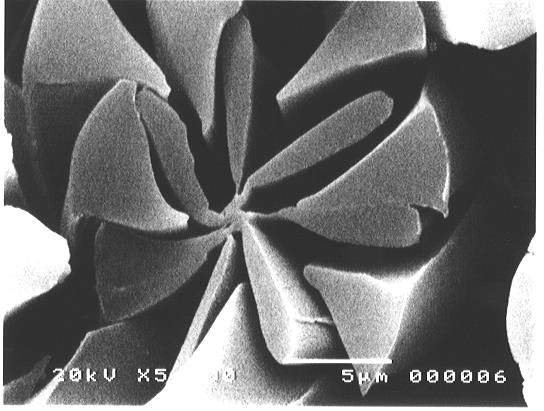
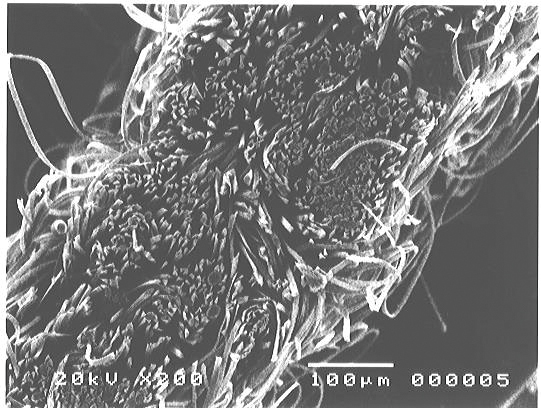
Use of ultra-fine, split fibers (Raw material technology)
While general fibers typically have diameters of 20–30 μm, it uses ultra-fine split fibers about 3–5 μm in diameter.
Integration with conductive polymer formed in situ (Converting technology)
A conductive polymer is formed through a reaction directly on the fiber surface, resulting in strong integration.
This prevents the conductive material from shedding and ensures long-lasting electrostatic dissipation.
How Electrostatic Dissipation Works
So how does the “discharging” mechanism actually work?
When the product approaches a charged object, the electric field (the force field created by surrounding charges) concentrates at the tips of the ultra-fine, split fibers.
From these points, a gentle discharge—corona discharge—occurs, separating gas molecules in the air into positive and negative ions.
These ions then neutralize the electrical charge on the target object, enabling electrostatic dissipation both in contact and non-contact situations.
In other words, each individual ultra-fine fiber acts like a tiny lightning rod.
Not Only Static Removal—Wiping Performance and Prevention of Re‑Adhesion
The ultra-fine split fibers in our Antistatic Nonwoven Fabric provide not only static elimination but also excellent wiping performance.
The wedge-shaped fiber edges effectively scrape away contaminants, making it easy to remove oily residues with a single wipe.
Because our Antistatic Nonwoven Fabric is soft and flexible, and contains no metal or carbon, it can be used safely without scratching charged objects.
One example application is surface cleaning of precision instruments.
In addition, since electrostatic dissipation prevents dust and dirt from re-attaching, the range of possible applications becomes even broader.
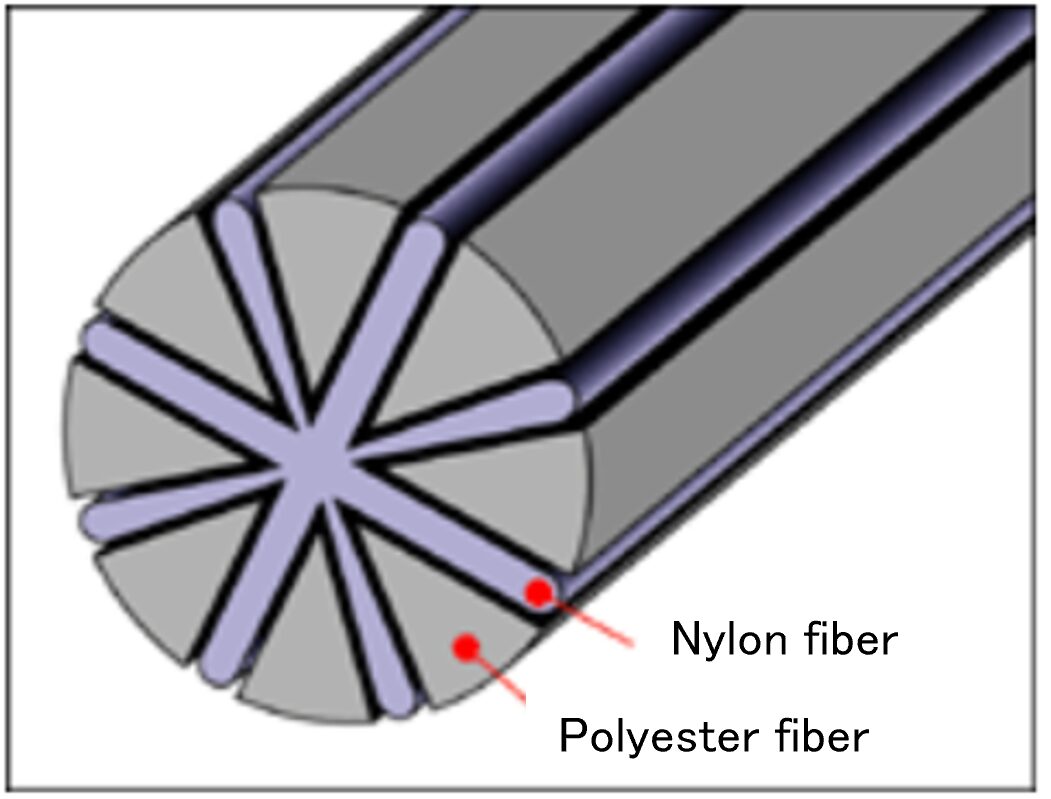
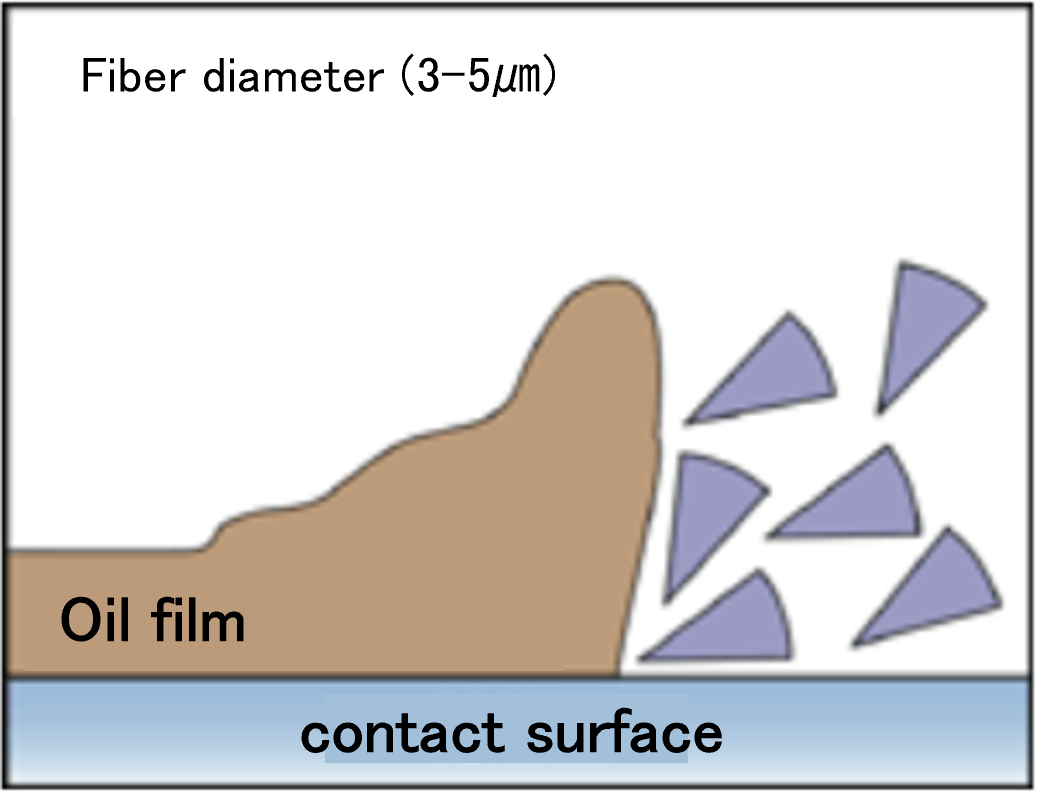
The wedge-shaped fiber edges scrape off contaminants
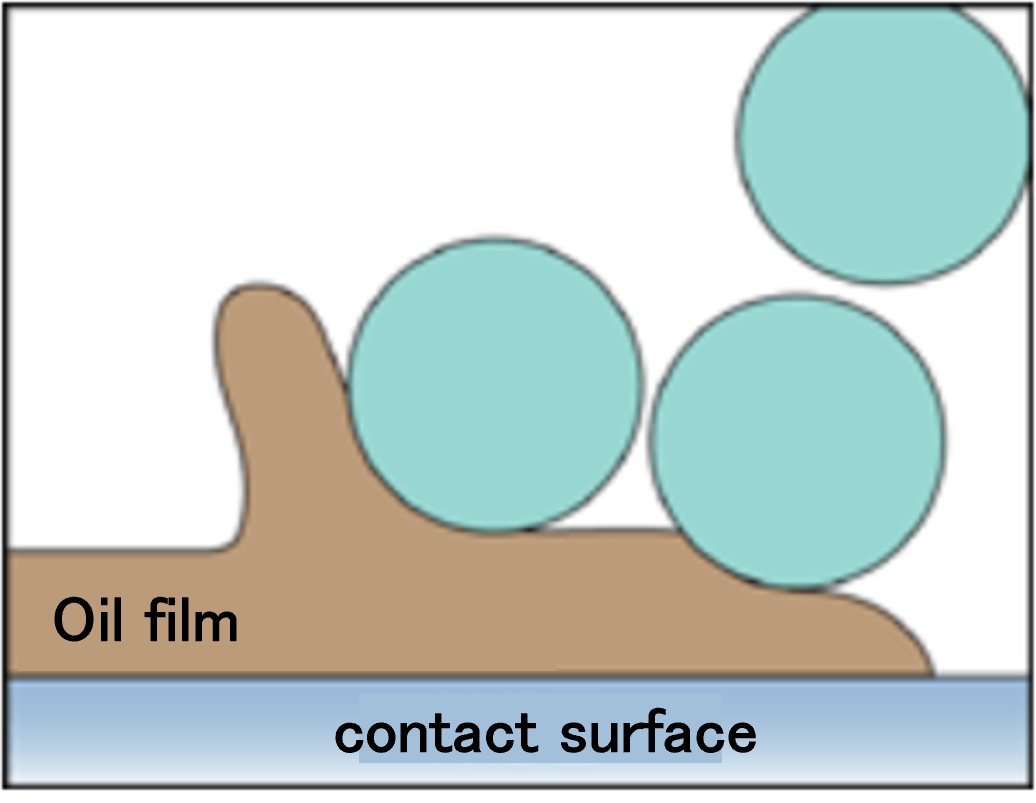
The thick, round cross-section results in incomplete wiping
Additional Advantages Unique to our Antistatic Nonwoven Fabric
Since the product is made of nonwoven fabric, it can be freely cut, sewn, or laminated with adhesive depending on the application—another major advantage.
It also offers several features compared with commonly used methods for eliminating static electricity:
Typical Electrostatic Control Products / Methods
| Type | Performance, durability, ease of use, operational load |
|---|---|
| Anti-static sheets (carbon-based) | Convenient, but performance may degrade due to surface wear. |
| Ion blowers / ion booths | High performance and wide coverage, but require installation space. Also require safety considerations and airflow design know-how. |
| Alcohol or water wiping | The solvent evaporates, and friction during wiping may actually increase static charge. |
Features of our Antistatic Nonwoven Fabric
- No equipment required / dry wiping allows simultaneous discharge and cleaning
- Conductive components do not easily shed thanks to in-situ polymer formation, enabling long-lasting performance
- Can be installed in specific, localized areas as needed
- Effective even in non-contact situations
If static electricity is causing issues in your workplace, we encourage you to try our Antistatic Nonwoven Fabric.
Japan Vilene will continue to develop products that solve customer challenges by combining the nonwoven expertise and technologies we have cultivated since our founding with our flexible, creative approach.